


Financial Freedom
Financial freedom is more than just having a lot of money—it’s about having control over your life and your financial choices. When you achieve freedom, you are no longer constantly stressed about bills, debts, or unexpected expenses. Instead, your money begins to work for you through smart saving, budgeting, and investing.
Many people believe financial freedom is only for the wealthy, but with the right habits and financial planning, anyone can move closer to this goal. It allows you to make life decisions based on your passions rather than financial pressure. In simple terms, financial Independence means living comfortably, feeling secure about your future, and having the independence to enjoy life on your own terms
What is Financial Freedom?
Financial freedom means having enough money, savings, and investments to live the life you want without constantly worrying about finances. It is the point where your basic living expenses can be covered by your income sources, such as savings, investments, or passive income. When someone achieves financial freedom, they are no longer completely dependent on a single job or paycheck to survive.
In simple terms, financial independence gives you the ability to make life choices based on your goals and interests rather than financial pressure. It allows people to plan their future with confidence, handle unexpected expenses, and focus more on personal growth and happiness.
Achieving financial independence does not always mean being extremely rich; instead, it means managing money wisely, reducing unnecessary debt, and building financial security over time.
Habits of Financially Successful People

People who achieve financial freedom usually follow simple but powerful financial habits.
They track expenses
They regularly monitor their spending to understand where their money goes and avoid unnecessary expenses.
They invest regularly
Instead of only saving money, they invest consistently to grow their wealth over time.
They focus on long-term wealth
They make financial decisions that help them build stable and sustainable wealth in the future.
They avoid unnecessary debt
They stay away from high-interest or unnecessary loans to maintain strong financial stability.
Why Financial Freedom is Important
Financial independence is important because it gives people stability, confidence, and control over their financial life. When individuals manage their money wisely and build strong financial habits, they can reduce financial pressure and focus on living a more balanced and secure life.
Reduces financial stress
One of the biggest benefits of freedom is the reduction of financial stress. When you have savings, stable income, and good financial planning, you do not have to constantly worry about bills, debts, or unexpected expenses. This peace of mind allows you to focus more on your personal goals and overall well-being.
Gives more life choices
Financial freedom gives people the ability to make important life decisions without being limited by money problems. For example, you may choose a career that you enjoy, start a business, travel, or invest in learning new skills. When finances are stable, you have greater flexibility in shaping your future.
Allows early retirement
Another advantage of financial independence is the possibility of retiring earlier than usual. When people save and invest wisely over time, they can build enough wealth to support their lifestyle without relying completely on a regular job. This allows them to spend more time on personal interests, family, or hobbies.
Improves quality of life
Freedom can significantly improve overall quality of life. With better financial stability, individuals can afford better healthcare, education, living conditions, and personal development opportunities. It also creates a sense of security that helps people enjoy life more comfortably.
Provides security during emergencies
Unexpected situations such as medical emergencies, job loss, or economic challenges can happen at any time. Financial freedom helps people prepare for these situations by building savings and emergency funds. Having this financial cushion ensures that temporary problems do not become long-term financial crises.
Key Principles of Financial Freedom
Achieving financial freedom requires following a few important financial principles that help people manage money wisely and build long-term stability.
Spend less than you earn
One of the most important rules of financial Independence is controlling your spending. When your expenses are lower than your income, you can save and invest the extra money for the future.
Save consistently
Regular saving helps build financial security over time. Even small savings each month can grow into a strong financial cushion if done consistently.
Invest for long-term growth
Investing allows your money to grow through returns and compound growth. Long-term investments help build wealth and move you closer to freedom.
Avoid unnecessary debt
High-interest debts can slow down financial progress. Avoiding unnecessary borrowing helps maintain financial stability and protects your income.
Build multiple income sources
Having more than one source of income, such as investments, side businesses, or passive income, reduces financial risk and supports long-term financial freedom.
Financial Freedom vs Financial Independence
| Aspect | Financial Freedom | Financial Independence |
| Meaning | Financial freedom means having enough money and financial stability to live comfortably without constant financial stress. | Financial independence means having enough savings or investments so you no longer rely on a regular job for income. |
| Income Source | Income may still come from a job, business, or investments. | Income mainly comes from investments, passive income, or assets. |
| Lifestyle | Allows people to manage their expenses easily and make life decisions with fewer financial limitations. | Allows people to live without depending on employment for daily expenses. |
| Financial Goal | Focuses on achieving stability, security, and control over personal finances. | Focuses on becoming completely self-sufficient financially. |
| Work Dependency | A person may still work but without financial pressure. | Work becomes optional because basic expenses are covered by investments or passive income. |
Steps to Achieve Financial Freedom
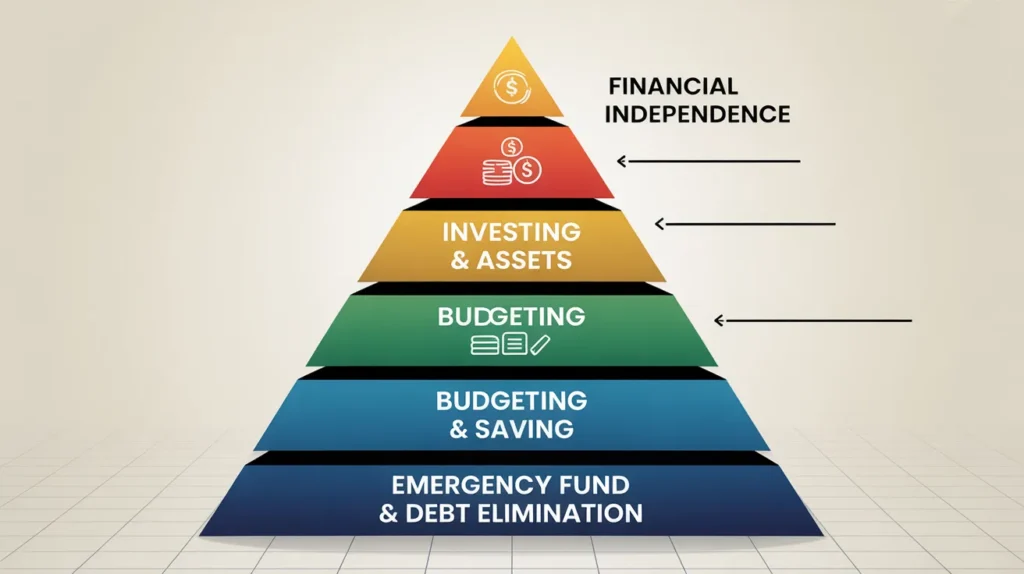
Achieving financial freedom requires a clear strategy, disciplined money management, and consistent financial habits. By following these practical steps, individuals can gradually build financial stability, wealth, and financial independence over time.
Set clear financial goals
Start by defining your financial goals, such as saving a certain amount, reducing debt, or building investments. Clear goals help you stay focused on your personal finance journey.
Create a monthly budget
A monthly budget helps you manage your income and expenses effectively. Budgeting ensures that you control spending and allocate money for saving and investing.
Build an emergency fund
An emergency fund is an essential part of financial planning. It provides a financial cushion during unexpected events such as medical emergencies or job loss.
Pay off high-interest debt
Reducing high-interest debt, such as credit card balances, helps improve your financial health. Paying off debt frees up money that can be used for wealth building and investments.
Start investing early
Investing early allows your money to grow through compound interest and long-term investment strategies. Regular investing is a key step toward achieving financial freedom.
Increase your income
Exploring additional income sources such as side hustles, freelance work, or passive income opportunities can accelerate your path to financial freedom.
Track your financial progress
Regularly reviewing your savings, investments, and expenses helps you stay on track. Tracking progress ensures that your money management strategy is moving you closer to financial freedom.
Common Mistakes That Prevent Financial Freedom
- Overspending
- No budgeting
- Relying on one income source
- Ignoring investments
- Lifestyle inflation
Conclusion
Achieving financial freedom is not about becoming rich overnight; it is about making smart financial choices consistently. By building strong money habits, saving regularly, and investing for the future, anyone can move closer to financial independence. Small steps taken today can create a secure and stable tomorrow. Stay focused on your goals, manage your finances wisely, and your journey toward financial freedom will become a reality.
What is financial freedom?
Financial freedom means having enough savings, investments, and passive income sources to cover your daily living expenses without depending completely on a regular job. When someone achieves financial freedom, they have greater control over their time, career choices, and lifestyle because their finances are stable and secure.
How much money do I need to achieve financial freedom?
The amount required depends on your lifestyle, monthly expenses, and long-term financial goals. A common guideline used by financial planners is the “25x rule,” which suggests saving or investing around 25 to 30 times your yearly expenses. For example, if you spend $40,000 per year, you may need about $1 million invested to maintain financial independence through investment returns.
At what age can someone achieve financial freedom?
There is no specific age for achieving financial freedom. Some individuals reach it in their 30s or 40s through disciplined saving, early investing, and building multiple income streams. Others may achieve it later in life as they accumulate assets and retirement savings. The timeline largely depends on income level, spending habits, and investment strategy.
What is the fastest way to achieve financial freedom?
The fastest path usually combines several strategies: increasing income, controlling unnecessary expenses, saving consistently, and investing early. Building additional income sources such as side businesses, freelance work, or passive investments can also accelerate progress toward financial independence.
Is financial freedom the same as financial independence?
The two concepts are closely related but slightly different. Financial independence generally means you no longer rely on a traditional job because your investments or passive income can support your lifestyle. Financial freedom focuses more on having flexibility, security, and the ability to make life decisions without being heavily restricted by financial limitations.
Can anyone achieve financial freedom?
While financial freedom may look different for everyone, most people can work toward it with the right financial habits. Consistent saving, disciplined spending, smart investing, and long-term planning can gradually build financial stability and independence over time.
What are the best investments for financial freedom?
Many people build wealth through long-term investments such as stocks, mutual funds, index funds, real estate, and retirement accounts. These investment options allow money to grow over time through compound returns. Diversifying investments and maintaining a long-term strategy are important factors in achieving financial freedom.
Why is financial freedom important?
Financial freedom provides peace of mind and reduces the stress that often comes from financial uncertainty. It allows individuals to handle emergencies, pursue personal goals, spend more time with family, and make career or life decisions without being controlled by financial pressure.