


What Does Financial Freedom Mean Today?
Today, financial freedom means having control over your money and not constantly worrying about financial problems. It is the ability to cover your living expenses through stable income, savings, or investments without feeling financial pressure. In modern times, many people aim for financial freedom earlier so they can enjoy more flexibility in their careers, lifestyle, and personal goals.
With rising living costs and changing work environments, financial freedom also means managing money wisely, building multiple income sources, and planning for long-term financial security. It allows individuals to focus on personal growth, family, and life experiences rather than being limited by financial stress.
10 Important Tips to Achieve Financial Freedom Earlier

1. Automate Your Savings and Investments
One of the biggest challenges people face is consistently saving money. Many individuals plan to save after paying expenses, but by the end of the month there is often very little left.
How to achieve it:
In developed economies, most banks and financial platforms allow automatic transfers. You can set up an automated system where 10–30% of your income is transferred directly into savings or investment accounts on the day you receive your paycheck.
For example, if someone earns $4,000 per month, they can automatically transfer $800 into savings or investments before spending anything else. This strategy is known as “paying yourself first.” Over time, automated saving ensures consistency and removes emotional spending decisions.
2. Increase Your Savings Rate Instead of Only Increasing Income
In many developed countries, people focus only on increasing their salary. However, higher income does not guarantee financial progress if spending increases at the same pace.
How to achieve it:
Focus on improving your savings rate, which is the percentage of income you save or invest. For example:
- If you earn $5,000 per month and save $1,000, your savings rate is 20%.
- If you increase that to $1,500, your savings rate becomes 30%.
People who achieve financial freedom earlier often maintain a 30–50% savings rate. This might sound difficult, but it can be achieved by controlling lifestyle costs, housing expenses, and unnecessary spending.
3. Avoid Lifestyle Inflation
Lifestyle inflation happens when people increase their spending every time their income grows. For example, when someone receives a salary raise, they may upgrade their car, move to a larger apartment, or spend more on entertainment.
How to achieve it:
Instead of increasing spending, allocate income increases toward investments and wealth building. For instance:
- If your salary increases by $1,000 per month, invest $700–$800 of that increase rather than spending it.
- Maintain a lifestyle that is comfortable but financially sustainable.
Many financially successful individuals continue living below their means even when their income grows significantly.
4. Invest in Income-Generating Assets
Savings alone are not enough to achieve financial freedom, especially in modern economies where inflation reduces the value of money over time.
How to achieve it:
Focus on investments that can grow wealth and generate income. Some common examples include:
- Stock market index funds
- Dividend-paying stocks
- Real estate investments
- Retirement accounts
- Exchange-traded funds (ETFs)
For example, investing $500 monthly in a diversified index fund with an average annual return of 7–8% can grow into a significant amount over 20–30 years. The earlier you begin investing, the stronger the impact of compound growth.
5. Develop Multiple Income Streams
In modern economies, relying on a single job can be risky. Economic changes, layoffs, or industry shifts can quickly impact financial stability.
How to achieve it:
Building additional income sources increases financial security and accelerates wealth building. Some common options include:
- Freelancing or consulting
- Online businesses
- Dividend investments
- Rental properties
- Digital products or content creation
For example, someone earning $4,000 per month from their job could add a side income of $500–$1,000 through freelancing or online work. Over time, additional income streams can become significant contributors to financial independence.
6. Build a Strong Emergency Fund
Unexpected events such as medical expenses, job loss, or economic downturns can disrupt financial plans. Without emergency savings, people often rely on debt during difficult situations.
How to achieve it:
Financial experts generally recommend saving three to six months of living expenses in a separate emergency fund. In high-cost countries, this fund may need to be larger due to higher housing and healthcare costs.
For example:
- If your monthly expenses are $3,000
- Your emergency fund should be $9,000 to $18,000
This financial safety net ensures that temporary problems do not become long-term financial setbacks.
7. Improve Your Financial Knowledge
Financial education is one of the most powerful tools for building wealth. Many people struggle financially not because they earn too little but because they lack knowledge about investing, budgeting, and long-term financial planning.
How to achieve it:
Spend time learning about personal finance through:
- Books on investing and wealth building
- Financial podcasts
- Educational websites and courses
- Research-based finance blogs
Understanding how money works allows individuals to make informed decisions about saving, investing, and managing financial risks.
8. Reduce High-Interest Debt Quickly
Debt with high interest rates can significantly slow financial progress. Credit card balances and personal loans often carry interest rates of 15–25%, which can accumulate quickly.
How to achieve it:
Focus on eliminating high-interest debt as quickly as possible. Two common strategies include:
- Debt Avalanche Method: Pay off debts with the highest interest rates first.
- Debt Snowball Method: Pay off smaller debts first to build momentum.
Once high-interest debt is cleared, the money previously used for debt payments can be redirected toward investments and savings.
9. Track Your Net Worth Regularly
Tracking financial progress helps people stay motivated and aware of their financial situation.
How to achieve it:
Your net worth is calculated by subtracting total liabilities (debts) from total assets (savings, investments, property).
For example:
Assets:
- Savings: $20,000
- Investments: $50,000
- Property: $200,000
Liabilities:
- Mortgage: $150,000
Net Worth:
$270,000 – $150,000 = $120,000
Tracking this number every few months helps measure financial growth and identify areas for improvement.
10. Stay Consistent With Your Financial Plan
Financial freedom is rarely achieved quickly. It requires consistent effort over many years.
How to achieve it:
Successful individuals follow disciplined financial habits such as:
- Saving regularly
- Investing consistently
- Avoiding unnecessary debt
- Reviewing financial goals annually
Even small actions repeated over long periods can produce powerful results. Consistency, patience, and long-term thinking are essential for building lasting financial security.
11. Create a Smart Budget
Creating a smart budget is one of the most important steps toward achieving financial freedom earlier. A budget helps you understand how much money you earn, how much you spend, and how much you can save or invest each month. Without a clear budget, it is easy to overspend and lose control of your finances.
How to achieve it:
Start by listing your monthly income and all necessary expenses such as housing, food, transportation, and utilities. After covering essential expenses, allocate a portion of your income toward savings and investments. Many financial experts recommend using the 50/30/20 budgeting rule, where 50% of your income is used for necessities, 30% for personal spending, and 20% for savings or investments. Tracking your expenses regularly helps you identify unnecessary spending and adjust your budget to improve your financial stability.
12. Pay Off High-Interest Debt Quickly
High-interest debt can significantly slow down your journey toward financial freedom because a large portion of your income goes toward paying interest instead of building wealth. Credit cards, personal loans, and some short-term loans often have very high interest rates, which can grow rapidly if not managed properly.
How to achieve it:
Focus on paying off debts with the highest interest rates first, as this reduces the total interest you pay over time. This strategy is often called the debt avalanche method. Another effective approach is to increase your monthly payments whenever possible so that the debt is cleared faster. Once high-interest debts are eliminated, you can redirect that money toward saving, investing, and building long-term financial security.
Common Mistakes That Delay Financial Freedom
Many people struggle to achieve financial freedom because of certain financial habits that slow their progress. Avoiding these mistakes can help you build wealth faster and maintain financial stability.
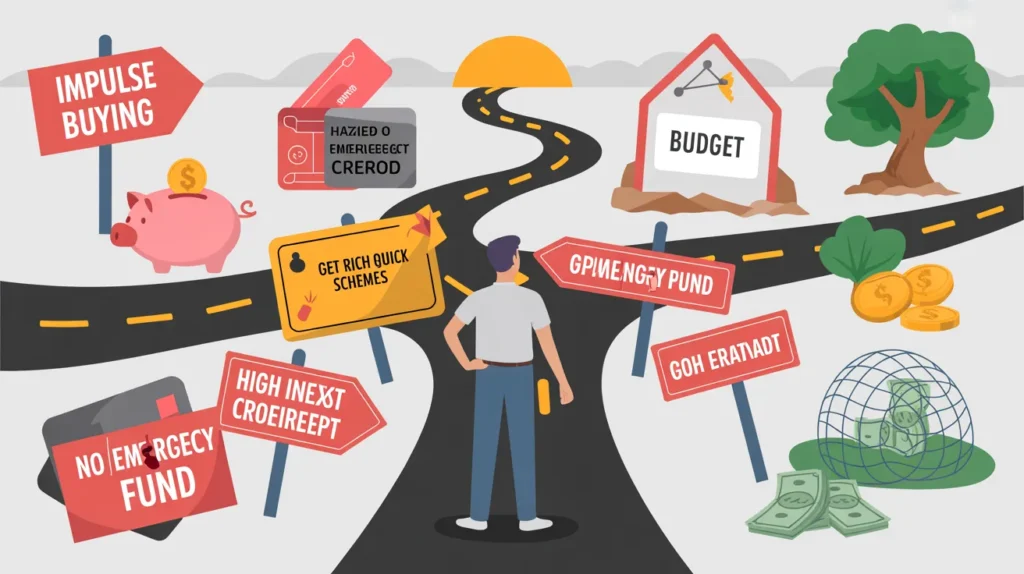
Overspending and Poor Money Management
Spending more than necessary on non-essential items reduces the money available for saving and investing. Controlling expenses and managing money wisely is essential.
Not Investing Early
Delaying investments means missing the benefits of compound growth. Starting early allows your money to grow over time and helps build long-term wealth.
Relying on a Single Income Source
Depending only on one job can be risky. Building additional income sources can improve financial security and accelerate financial progress.
Ignoring Financial Planning
Without a clear financial plan, it becomes difficult to achieve long-term goals. Proper budgeting, saving, and investment planning are important for financial growth.
Accumulating High-Interest Debt
High-interest debts, such as credit cards, can slow down financial progress. Paying off these debts quickly helps free up money for saving and investing.
Final Thought
In today’s rapidly changing economic environment, achieving financial freedom earlier requires a combination of disciplined spending, intelligent investing, and continuous financial learning. By applying these practical strategies consistently, individuals can gradually build wealth, reduce financial stress, and gain the freedom to make life decisions based on their goals rather than financial limitations.
What is the fastest way to achieve financial freedom?
The fastest way to achieve financial freedom is by increasing your savings rate, investing consistently, reducing unnecessary expenses, and building multiple income sources. People who focus on disciplined spending and long-term investing often reach financial independence much earlier than those who rely only on a single salary.
How much should I save to achieve financial freedom earlier?
Many financial experts recommend saving and investing at least 20–30% of your income. A higher savings rate allows you to build wealth faster and invest more money over time. Consistently saving a larger portion of your income can significantly shorten the time required to reach financial independence.
Can financial freedom be achieved at a young age?
Yes, achieving financial freedom at a young age is possible if you start saving, investing, and managing money wisely early in life. Developing strong financial habits such as avoiding unnecessary debt, investing regularly, and building additional income streams can accelerate financial growth.
Why is investing important for financial freedom?
Investing is essential because it allows your money to grow through compound returns. Instead of relying only on earned income, investments such as stocks, index funds, real estate, or retirement accounts can generate long-term wealth and help support your financial independence.
What are the biggest mistakes that delay financial freedom?
Some of the most common mistakes include overspending, delaying investments, relying on a single income source, and accumulating high-interest debt. Ignoring financial planning or failing to control lifestyle inflation can also significantly slow down progress toward financial freedom.
How many income sources should a person have?
There is no fixed number of income streams required, but having two or more sources of income can improve financial stability. For example, a person might combine a full-time job with investments, freelance work, rental income, or a side business to build long-term financial security.
Is budgeting necessary for achieving financial freedom?
Yes, budgeting plays a crucial role in achieving financial freedom. A well-planned budget helps you track spending, control unnecessary expenses, increase savings, and ensure that money is allocated toward investments and long-term financial goals.
What role does an emergency fund play in financial freedom?
An emergency fund acts as a financial safety net during unexpected situations such as medical expenses, job loss, or urgent repairs. Having three to six months of living expenses saved can prevent financial setbacks and protect your long-term investment plans.